Find what slips past automation
Structured exploratory testing across real workflows, edge cases, and failure states — the defects scripts never thought to look for.
Explore the methodIndependent QA testing & software quality engineering
Cypher QA provides independent QA testing and software test engineering — finding what automated pipelines miss through structured exploratory testing, maintainable automation, and evidence-backed reporting — so releases ship on knowledge, not hope.
Requirements
Goals, risks and scope defined with your team
Test design
Scenarios, boundaries and edge cases mapped
Execution
Validation
Assertions checked at every layer
Report
Evidence-backed findings, classified by severity
Production-grade tooling
What Cypher QA does
Every engagement combines hands-on exploration with engineering discipline — so quality claims come with proof attached.
Structured exploratory testing across real workflows, edge cases, and failure states — the defects scripts never thought to look for.
Explore the methodMaintainable Playwright and API suites wired into CI, so regression confidence compounds with every release instead of eroding.
See it in productionFindings documented with screenshots, reproduction steps, and severity classification — readable by engineers and decision-makers alike.
Read a sample reportServices
Twelve focused capabilities organised into four disciplines. Every one is exercised daily across our own platforms.
Hands-on testing that exercises the product the way real users do — and reports what breaks.
Repeatable suites that turn regression testing from an event into a non-event.
The frameworks, checks and documentation that hold a quality system together.
Testing for AI-powered products — and AI as a multiplier inside QA itself.
Featured case study
An open-source platform that turns requirements, OpenAPI specs, and change context into structured test cases, executable pytest suites, and root-cause analyses — with strict typing and a large test suite guarding its own quality.
Inputs
Requirement documents
Analyzed into structured test design
OpenAPI specifications
Parsed for endpoints and auth schemes
CI failure artifacts
Logs, stack traces, screenshots, page source
Analysis engine
Pluggable adapters route work to the right model while output contracts stay deterministic — every response validated against typed schemas before it reaches application state.
Outputs
Structured test cases
Steps, boundaries, edge cases, risk ratings
Executable pytest suites
Generated fixtures, ZIP export
Root-cause reports
Severity, confidence, suggested fixes
Verified from the public repository — no invented features
Case study
Designed and built end-to-end: a layered automation platform that validates web applications at three levels, orchestrated with Docker Compose and gated in CI.
Automated quality gates
Proof of process
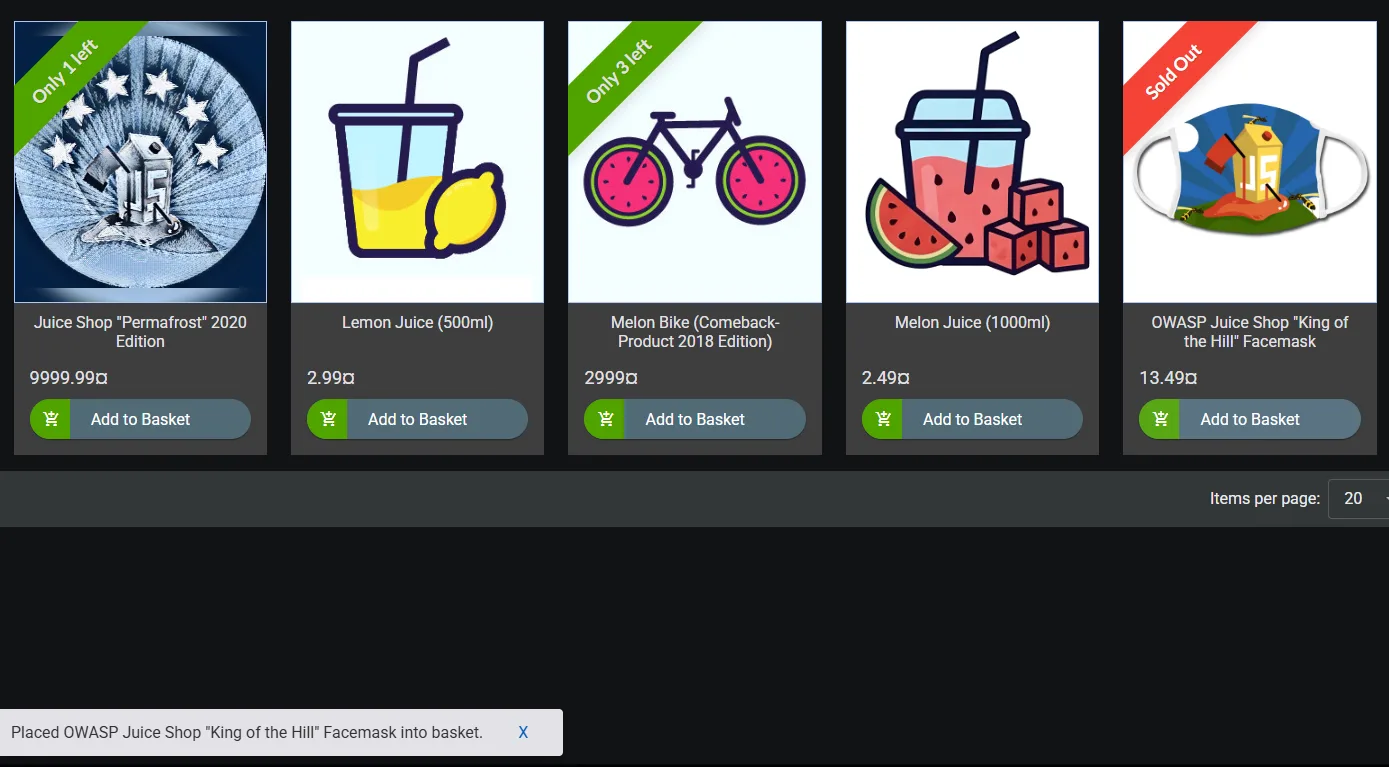
Our public sample report walks through a complete assessment of the OWASP Juice Shop demonstration application: seven findings, severity classification, reproduction steps, screenshot evidence, and an explicit release recommendation.
Release recommendation
Fix and retest
A blocking authentication failure was found in the new-account flow — the release cannot proceed until it is resolved and retested.


How we work
A repeatable process that turns uncertainty into documented, actionable knowledge.
Understand the product, its users, and where the real risk lives — before any test runs.
Test real workflows, edge cases, and failure states the way users would find them.
Automate repeatable coverage where it provides lasting value — not for automation's sake.
Document reproducible findings with severity classification and screenshot evidence.
Validate fixes, strengthen regression coverage, and confirm the release is ready.
Engagements
There is no fixed price list, because no two products carry the same risk. Every engagement is scoped around what it actually protects.
A focused assessment of your application with documented findings and evidence — the fastest way to learn where your product actually stands.
Build or extend repeatable automated coverage that holds up long after the engagement ends.
Recurring testing and release validation — a quality partner who knows your product, release after release.
Every engagement starts with a scoping conversation — you receive a written plan before any work begins.
Request a QA AssessmentFAQ
Short, factual answers about what Cypher QA does and how it works.
A QA tester verifies that software works as intended before it reaches users. The work includes functional testing of user journeys, exploratory testing to find defects scripts miss, regression testing to catch what fixes break, responsive testing across devices, and reporting defects with reproduction steps and evidence. Cypher QA provides this as an independent service — a QA tester for hire who works across web applications, APIs, and databases.
A software test engineer designs and executes testing strategies for software products — combining manual testing judgment with automated test suites, API and database validation, and CI/CD quality gates. Unlike a tester who only executes scripts, a test engineer builds the testing infrastructure itself. Cypher QA is an independent software test engineer for hire, demonstrated publicly by the Nexus Quality Engineering Platform and CypherPilot.
QA automation testing replaces repetitive manual checks with repeatable automated test suites. Cypher QA builds Playwright automation for UI journeys, pytest suites for API and database layers, and wires them into CI/CD pipelines so regressions surface on every change — with screenshots, video, and traces attached to failures for fast diagnosis.
Cypher QA works as an independent specialist: you get senior-level QA testing and software test engineering without the hiring overhead, and the deliverables are yours to keep — reproducible findings, maintainable automation, and documentation your team can build on after the engagement ends. Everything is backed by publicly inspectable open-source work.
Cypher QA is an independent software quality engineering service. It tests web applications, builds test automation, validates APIs and databases, wires quality gates into CI/CD pipelines, and applies AI-assisted workflows to speed up coverage and failure triage. The goal is simple: find defects earlier and give teams a clear, evidence-backed picture of release readiness.
Functional testing, exploratory and release testing, UI and responsive testing, API testing, database validation, end-to-end automation, and CI/CD-integrated regression. Work is delivered as reproducible findings with severity classification and evidence, or as maintainable automation your team owns.
Yes. Manual regression suites are converted into maintainable automated suites — typically Playwright for UI journeys and pytest for API and database layers — organized with the Page Object Model and integrated into CI so they run on every change. The Nexus Quality Engineering Platform demonstrates this approach end to end.
Yes. Playwright is the primary UI automation tool, demonstrated publicly by the Nexus Quality Engineering Platform: page objects, configurable browser selection (Chromium, Firefox, WebKit), and failure artifacts including screenshots, video, traces, and logs attached to Allure reports.
Yes. API testing covers REST endpoints directly — status codes, response bodies, JSON Schema validation, authentication flows, and negative paths — without depending on the UI. CypherPilot additionally generates ready-to-run pytest API suites from OpenAPI specifications.
Yes. AI features need different verification strategies: structured output contracts validated against typed schemas, provider fallback and retry behavior, prompt versioning, and regression approaches suited to non-deterministic systems. These practices are implemented in CypherPilot, an open-source AI quality engineering platform built by Cypher QA.
CypherPilot is an open-source, AI-powered quality engineering platform. It analyzes product requirements into structured test cases with boundary and edge cases, generates pytest API test suites from OpenAPI specifications, and triages CI/CD failures into root causes with suggested fixes. It is built with FastAPI, React, PostgreSQL, and a provider-agnostic AI layer supporting OpenRouter and Ollama.
Nexus is an open-source QA automation framework that validates applications at three layers — UI, API, and database. It combines Playwright UI automation, schema-validated API clients, SQL assertions over PostgreSQL or SQLite, Dockerized orchestration, GitHub Actions pipelines, and Allure reporting with full failure artifacts.
A focused assessment covers agreed high-risk areas across functional, UI, and responsive behavior. You receive severity-classified findings with reproduction steps and screenshot evidence, an area-by-area status summary, observations needing further data, and an explicit release recommendation. The published sample assessment shows the exact format.
Four steps: scope (agree target, environments, risks, and exit criteria), test (exploratory and scripted passes, plus automation where it pays off), report (reproducible, evidence-backed findings), and verify (retest fixes, run regression checks, and issue a release recommendation).
Blog
Practical guides on QA testing, software test engineering, and quality assurance — written from demonstrated work.
A QA tester verifies software before it reaches users: functional testing, exploratory testing, regression testing, and defect reporting with evidence. Here is what the role actually involves.
Read the postQA testers execute testing; software test engineers build the testing system itself. How the roles differ, where they overlap, and which one your team actually needs.
Read the postQA automation testing replaces repetitive manual checks with repeatable automated suites. What it covers, how it fits into CI/CD, and when it is worth the investment.
Read the postNext step
Tell us what you’re building, what you’re testing, or where quality is becoming a problem.